

Want to support free content?
Let us know who you are!
Why am I seeing this?
LearnOncology.ca is a free educational content provider. If you want to support our editors (powered by caffeine and no sleep), fill in the following info to let us know who is using the site. We use cookies to prevent this popup from coming up frequently. Continue using the site if you are happy with this.


This module summarizes the key components of the preoperative assessment in adult patients with cancer. It highlights cancer-specific factors that influence perioperative risk and discusses strategies for preoperative optimization. By the end of this tutorial, the student should be able to:
The preoperative evaluation is a systematic assessment that identifies patient and procedure related factors that may influence perioperative risk. Although its principles are similar for all surgical patients, individuals living with cancer have unique considerations that can influence perioperative care. The effects of local tumor growth, metastases, side effects of cancer treatments, and coexisting medical comorbidities may impair physiologic reserve and increase the risk of perioperative complications [1-2]. Therefore, a focused medical history, physical examination, and review of prior and ongoing cancer therapies are essential components of the preoperative assessment [3]. A systems-based assessment of the cardiovascular, pulmonary, renal, hematologic, and endocrine systems should also be performed to identify modifiable risk factors and guide perioperative optimization [2-5].
A detailed medical history should be obtained for all patients undergoing surgery. This should include medical conditions, medications, allergies, use of recreational substances, prior investigations and imaging, and any previous complications related to anesthesia [6]. These elements should be reviewed to assess the degree of disease control and to determine whether additional investigation or optimization is required. In oncologic patients, the history should include the cancer type, stage, intent of treatment (curative or palliative), and the timing and trajectory of disease, as these factors significantly influence perioperative management [2].
The physical examination should be guided by the patient’s cancer diagnosis and clinical history, with emphasis on identifying findings that may alter perioperative management. The preoperative examination primarily focuses on the airway, cardiopulmonary, and neurologic systems, as these domains most directly influence anesthetic risk and perioperative safety [7].
Airway assessment is particularly important in patients with head and neck malignancies due to the potential for tumour-related distortion or obstruction that may complicate induction of anesthesia. In addition, prior radiation to these regions can result in trismus, limited mouth opening, restricted neck extension, and reduced mobility of the pharyngeal structures, all of which may further increase the difficulty of airway management [1] Airway evaluation should include the ‘LEMON’ approach (Look externally, Evaluate the 3-3-2 rule, Mallampati classification, Obstruction, and Neck mobility) [2]. Clinicians should assess mouth opening, Mallampati score, neck range of motion, the presence of visible oral or cervical masses, and signs of airway compromise such as stridor, hoarseness, or voice changes. In addition to predicting difficult intubation, the risk of difficult bag-mask ventilation should be considered. Factors associated with difficult mask ventilation include having a beard, obesity, older age, having no teeth, and a history of snoring or obstructive sleep apnea [7].
Clinicians should assess heart rate and rhythm, heart sounds, murmurs, blood pressure, and signs of heart failure or hemodynamic instability. Respiratory assessment should include respiratory rate, work of breathing, oxygen saturation, chest expansion, and auscultation for reduced air entry, crackles, or wheezing. Reduced breath sounds may suggest pleural effusion, atelectasis, or tumour-related mass effect, while signs of pulmonary edema or compromised ventilation may reflect impaired cardiopulmonary reserve [2,3,6]. It is also important to assess for signs of difficult intravenous access as the patient may require the need for ultrasound or preprocedural placement of peripheral or central vascular access [2].
Assess for chemotherapy-induced peripheral neuropathy or other focal deficits, which could impact surgical positioning, perioperative recovery, and mobility [2]. Any cognitive dysfunction, especially in older adults who will be given a general anesthetic, should also be noted as these may become more apparent postoperatively [5,8]. If regional anesthesia is considered, patients should be evaluated for skin infection, preexisting neuropathy or weakness, scoliosis, and other anatomic abnormalities that may complicate the procedure [7,8].
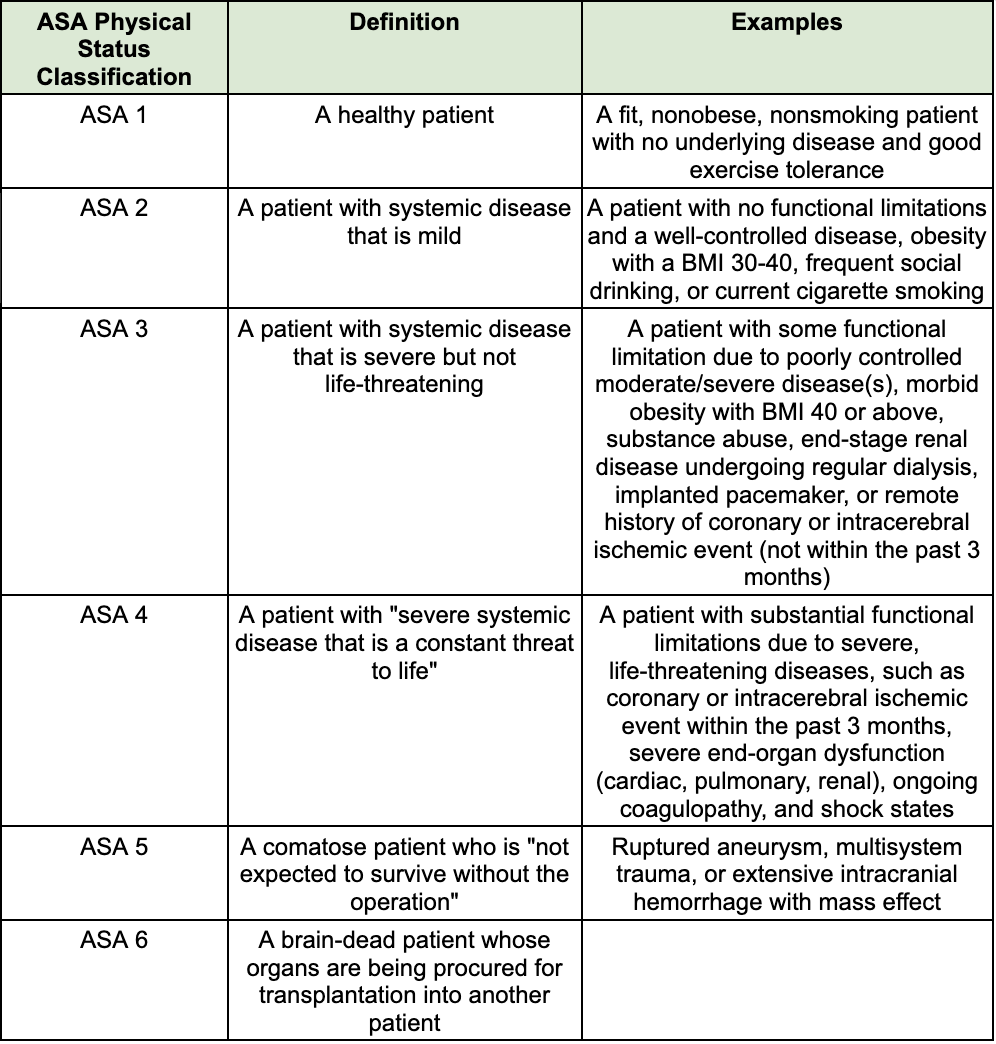
Assessment of perioperative risk is a key component of the preoperative evaluation. It estimates the patient's risk of postoperative complications, mortality, and functional decline, and helps guide perioperative planning and optimization [7]. It integrates the American Society of Anesthesiologists physical status classification system (ASA-PS), a systems-based assessment of organ function, functional and frailty status, and nutritional status.
The ASA-PS classification system is a subjective measurement of the overall health status of patients and is used by anesthesiologists, surgeons, and other clinicians involved in perioperative care. It is a tool used to estimate perioperative risk and a rating is assigned to every patient who undergoes anesthesia. Table 1 summarizes the ASA-PS.
The cardiovascular preoperative evaluation follows the general approach in the 2024 ACC/AHA Guideline on Perioperative Cardiovascular Evaluation and Management of Patients Undergoing Noncardiac Surgery [2,10]. Patients with cancer may have cardiovascular complications related to their malignancy or prior cancer therapy that increase perioperative risk. Mediastinal radiation can lead to pericardial disease, premature coronary artery disease, conduction abnormalities, and valvular heart disease, while neck radiation increases the risk of carotid artery stenosis. Certain chemotherapeutic agents, particularly anthracyclines and HER2-targeted therapies (e.g., trastuzumab), are associated with cardiomyopathy and heart failure. Some tyrosine kinase inhibitors may also prolong the QT interval and increase the risk of arrhythmias [1,3]. Electrocardiography (ECG) should be performed in patients who are symptomatic or have risk factors for underlying cardiopulmonary disease [8].
Chemotherapy, radiation therapy, and immune checkpoint inhibitors can all cause pulmonary toxicity that increases perioperative risk. Chemotherapy agents like bleomycin, methotrexate or cyclophosphamide can all cause interstitial pneumonitis followed by pulmonary fibrosis, while immune checkpoint inhibitors may cause immune-mediated pneumonitis. Pulmonary function testing and oxygen saturation assessment may be considered in patients with unexplained respiratory symptoms or abnormal examination findings. Symptomatic pleural effusions should be identified preoperatively, as drainage may be indicated to reduce perioperative respiratory compromise [3,8].
Tumors in or adjacent to the central airway or mediastinum may compress the airway, heart, or major vessels, leading to airway obstruction or hemodynamic instability during anesthesia. Patients should be assessed for symptoms including stridor, dyspnea, wheezing, orthopnea, and facial or neck swelling suggestive of superior vena cava obstruction. Preoperative imaging with CT, MRI, or echocardiography may be required to evaluate the extent of airway, cardiac, or vascular involvement [1,3].
Several chemotherapeutic agents and malignancy-related processes can impair renal function and increase perioperative risk. Cisplatin and other platinum-based therapies are associated with dose-dependent nephrotoxicity and may also cause electrolyte disturbances such as hypomagnesemia. Cyclophosphamide can lead to hemorrhagic cystitis, which may result in obstructive uropathy due to clot accumulation in the bladder. Tumor location or progression may also contribute to renal dysfunction through direct invasion or obstructive hydronephrosis [1].
Management focuses on correcting reversible causes of renal dysfunction. This may include decompression of obstructive uropathy via cystoscopy or percutaneous nephrostomy and magnesium supplementation for hypomagnesemia. In patients with malignancy related hematuria, perioperative anticoagulation may also require individualized adjustments [1].
Patients with cancer are at increased risk of hematologic abnormalities that significantly affect perioperative management. A hypercoagulable state is common due to malignancy-related increases in procoagulant factors and may be further exacerbated by certain chemotherapeutic agents. As a result, patients are at increased risk of perioperative venous thromboembolism and should generally receive appropriate thromboprophylaxis unless contraindicated [1,3].
Anemia is also common in cancer patients and is associated with reduced functional status and worse postoperative outcomes. Preoperative assessment should include a complete blood count, with investigation and treatment of reversible causes such as iron deficiency. Blood transfusion may be required in selected patients with severe anemia. However, transfusions can cause transfusion-related immunomodulation and have been associated with an increased risk of cancer recurrence. The goal is to transfuse as few units possible to achieve a hemoglobin level of ≥70 g/L [3,6].
Cancer and chemotherapy related myelosuppression may result in neutropenia, lymphopenia, or thrombocytopenia, increasing the risk of infection and bleeding. Elective surgery should be postponed in patients with significant neutropenia when possible, and thrombocytopenia should be corrected or optimized prior to surgery, with most procedures requiring a platelet count of at least 50 × 10⁹/L. Drugs that impair platelet function (aspirin, clopidogrel, NSAIDs) may need to be discontinued preoperatively [3].
Many chemotherapeutic regimens include glucocorticoids. Chronic glucocorticoid use may result in hypothalamic-pituitary-adrenal (HPA) axis suppression, which can lead to adrenal insufficiency. Patients with known or suspected HPA axis suppression should receive perioperative glucocorticoid supplementation. In patients with uncertain risk of adrenal insufficiency, morning serum cortisol measurement or adrenocorticotropic hormone (ACTH) stimulation testing may be performed preoperatively to assess HPA axis function [3,11].
Hyponatremia can occur due to syndrome of inappropriate antidiuretic hormone secretion (SIADH), particularly in small cell lung cancer. Although the majority will be asymptomatic and is generally not a contraindication to surgery [1,3].
Hypercalcemia may occur due to malignancy (breast cancer, non-small cell lung cancer, multiple myeloma), or ectopic production of parathyroid hormone (PTH). Patients with hypercalcemia should be investigated for occult hyperparathyroidism and corrected before surgery when feasible [3].
Neck radiation, tyrosine kinase inhibitors, and immune checkpoint inhibitors may cause hypothyroidism. Patients at risk should have preoperative thyroid function testing with serum thyroid stimulating hormone (TSH) and free thyroxine (T4), as untreated hypothyroidism is associated with impaired wound healing. Patients diagnosed with hypothyroidism should receive supplemental thyroid hormone preoperatively [3].
Hypoglycemia may occur in patients with certain tumors, including mesenchymal, adrenocortical, pancreatic non-islet cell, and hepatocellular malignancies. Management is symptomatic, and some patients may require perioperative glucose supplementation. Hyperglycemia is also common in patients receiving chemotherapy, particularly when corticosteroids are co-administered. Many of these patients have additional risk factors for diabetes and standard perioperative diabetes management applies, including preoperative glycemic assessment [1].
Cancer and its treatments commonly lead to declines in physical performance, sarcopenia, and reduced cardiorespiratory fitness, which reflect diminished physiologic reserve and increased surgical risk [2,12].
Functional status is typically assessed through measures of physical performance and cardiorespiratory fitness, including maximal oxygen consumption (VO2 max), metabolic equivalents (METs), and objective strength based measures like the hand grip test or sit to stand test [12]. Reduced VO2 max and low functional capacity are associated with higher rates of cardiopulmonary complications, prolonged hospitalization, and increased postoperative morbidity [2,5,12].
Prehabilitation interventions aim to improve these domains through structured exercise programs, inspiratory muscle training, nutritional optimization, and supportive care delivered during the preoperative window. The goal is to optimize functional capacity and reduce frailty prior to surgery [2,5,12].
Malnutrition may result from reduced intake due to pain, nausea, mucositis, or tumour involvement of the aerodigestive or gastrointestinal tract, as well as cancer-related metabolic and inflammatory changes [3].
All cancer patients being considered for surgery should undergo screening for malnutrition risk, including using validated tools such as the Canadian Nutrition Screening Tool (CNST), Malnutrition Universal Screening Tool (MUST), Nutritional Risk Screening (NRS-2002), or Patient-Generated Subjective Global Assessment (PG-SGA), alongside objective measurements like weight loss, BMI, dietary intake, and serum albumin [12].
Dietitian involvement is recommended for malnourished oncologic patients before undergoing surgery. Nutritional optimization typically targets adequate energy (25–30 kcal/kg/day) and protein intake (1.5 g/kg/day). Immunonutrition may also be considered and involves supplementation with arginine and glutamine to support immune function, wound healing, and protein synthesis [12].
Cancer is associated with a substantial symptom burden that contributes to psychological distress and reduced quality of life. Pain is the most common and often most feared symptom, yet it remains frequently undertreated due to underrecognition of severity and suboptimal use of multimodal analgesic strategies. This may be compounded by clinician concerns regarding opioid related adverse effects and misconceptions about tolerance, dependence, and addiction. While pharmacologic tolerance is common, psychological dependence and addiction are uncommon in appropriately managed cancer pain [2]. Opioid dose titration and multimodal perioperative analgesia can improve pain control and reduce patient distress related to postoperative pain [3].
The preoperative assessment also provides an opportunity to discuss goals of care, including resuscitation status. These discussions should involve shared decision-making, as patients retain autonomy to define perioperative limits of care. Options may range from full resuscitation to individualized limitations depending on patient values and clinical context [2,13]. Table 2 summarizes examples of care that may be provided based on a patient’s resuscitation status:
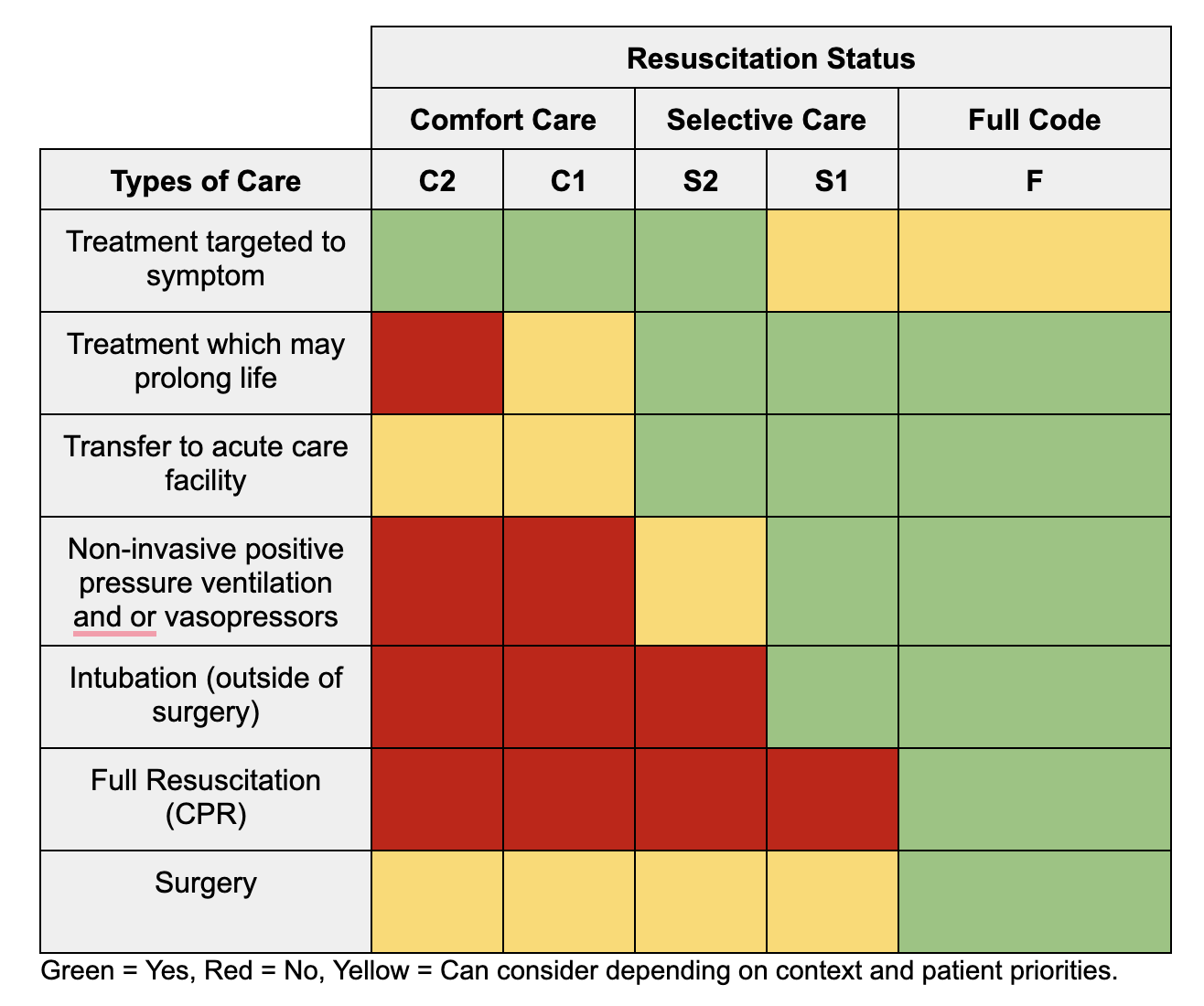
If a Do Not Resuscitate (DNR) order is established, decisions about the perioperative status usually fall into three general categories [15]:
The preoperative assessment of patients with cancer extends beyond routine surgical evaluation and requires consideration of cancer-specific factors that influence perioperative risk. A comprehensive assessment includes a detailed history and physical examination, evaluation of cancer therapies, systematic assessment of organ function, and identification of modifiable risk factors, including malnutrition, impaired functional status, and inadequate pain control. Optimization of these factors, together with discussions regarding goals of care, supports improved surgical outcomes.
Use your mouse to click through the slides and answer each question in the text box provided.
Note: This case can be completed on an iPad. To do this download the (free) Articulate Mobile Player for the iPad by clicking here.
