

Want to support free content?
Let us know who you are!
Why am I seeing this?
LearnOncology.ca is a free educational content provider. If you want to support our editors (powered by caffeine and no sleep), fill in the following info to let us know who is using the site. We use cookies to prevent this popup from coming up frequently. Continue using the site if you are happy with this.


The following module was designed to supplement learning in the clinic. Please take the time to read through each section by clicking the headings below. By the end of the module, the following objectives should be addressed:
Palliative care focuses on improving comfort, quality of life, and overall well-being for individuals living with serious illness, while also supporting their caregivers. The aim is to relieve physical symptoms such as pain, nausea, fatigue, and shortness of breath, as well as addressing emotional, psychological, social, cultural, and spiritual needs of patients and their loved ones [1].
Across Canada, palliative care can be provided in a variety of settings, including hospitals, palliative care units, long-term care facilities, hospices, clinics, and patients’ homes. While the majority of Canadians would prefer to pass away at home, only about 15% have access to palliative home care services [1]. At the same time, relatively few health care providers in Canada specialize in or practice primarily community palliative care [1]. To promote broader awareness of home-based palliative care, this module provides a foundational overview of several key components including goals of care discussions, interdisciplinary support, symptom management, and end-of-life care.
The decision to begin palliative care is made collaboratively by medical professionals and the patient. Depending on discussions with their provider about goals of care, a transition to an at-home palliative care approach may be the most appropriate option [1]. For oncology patients, some situations in which a provider may recommend community palliative care include:
Complex cases may be brought to multidisciplinary tumour boards, which reach a consensus on whether further treatment options exist. Regardless, patients may benefit from palliative care involvement whether or not they are receiving therapeutic care, even when further treatment options are available. In fact, palliative care can be provided concurrently with therapeutic treatments, particularly to help patients with symptom management and/or functioning.
As a patient’s care begins moving from outpatient oncology appointments to home-based palliative care, it is prudent to refer them to a community palliative care nursing team and/or a community palliative care physician. Early referral has been shown to improve quality of life and mood, and to make it more likely that a patient’s end-of-life preferences are identified [2].
When a healthcare provider has identified a patient who may need to transition from curative treatment to a primarily palliative approach to care, they may opt to discuss this with the patient at a dedicated appointment. Inviting the patient’s support system, including their substitute decision maker, is important when discussing illness understanding and goals of care. The Serious Illness Conversation Guide provides a structure to initiate and facilitate this conversation where the provider: asks permission, assesses what the patient understands and wants to know, shares their prognosis, explores patient goals and fears for the future, and closes by summarizing the situation and making a recommendation for next steps [1]. It should also be determined if at-home palliative care is practical, safe, and appropriate, which is discussed further below. Next steps commonly include a referral to specialized palliative care services, request for transfer to a palliative care facility, or a referral to home-based care. It is important to remember that a patient may not feel prepared to pursue palliative care after the initial conversation. In these cases, it is important to make the patient feel supported, explore their expectations and goals for the future, and continue working with them while establishing the possibility of initiating another conversation regarding palliative care in the future.
Certain patients may benefit from goal setting during a serious illness conversation as it may provide a sense of control and help them stay focused on what matters to them. Thematic domains for goals can include physical wellbeing (going for walks, getting good sleep), psychological wellbeing (engaging with reading, practicing coping skills), social wellbeing (spending time with loved ones, continuing to engage with work, getting their finances in order), and spiritual wellbeing (finding inner strength, connecting with a higher power) [2]. Ultimately the best goal(s) for a patient will be highly personal, though a provider can help patients explore their goals through serious illness conversations.
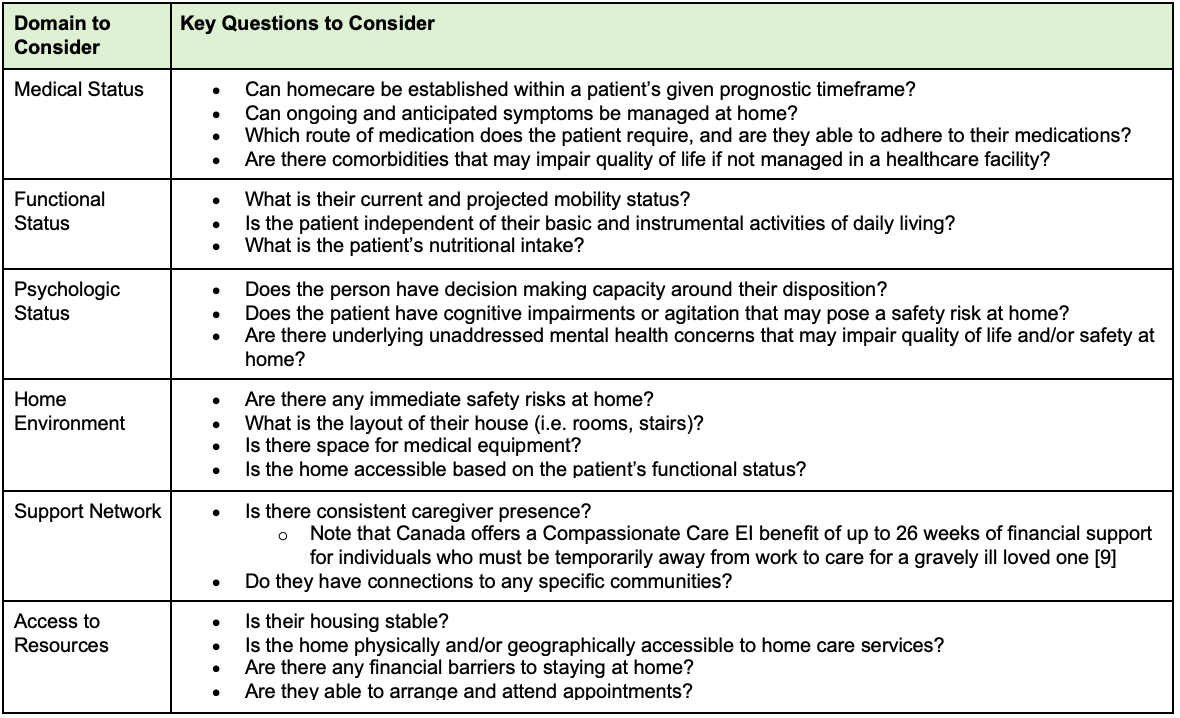
When a patient expresses a wish to pass away at home, it is important for the provider to evaluate safety and practicality of the home environment based on a number of domains. These domains include the patient’s medical status, functional status, psychologic status, home environment, support network, and access to resources. A brief summary of key points to consider for each domain is outlined in Table 1.
Initial and ongoing documentation of a patient’s functional status is also important to allow for ongoing monitoring of their functional and care needs. Objective tools used to communicate a patient’s function include: the Palliative Performance Status (PPS), which is widely used to communicate function in palliative care; the ECOG scale, commonly used in oncology to communicate functional status in relation to systemic therapy candidacy; and the Karnofsky Performance Status Scale (KPS), used to monitor functional status in relation to disease progression.
Ultimately, the provider should offer a recommendation, based on their assessment, that clarifies which institutional and/or community environments palliative care be safely delivered in to adequately support patient function and wellbeing. It should also be recognized that these decisions around disposition planning are dynamic and must be revisited on an ongoing basis. For example, a patient who develops worsening symptoms and/or increased care needs not manageable at home may need their care transitioned from home to hospice [1]. Providers should also consider providing referrals to counselling services for patients experiencing major adjustments in their care, as these transitions are often difficult to cope with [2]. Many cancer agencies offer psychiatric services and in-house counselling for patients and their families.
For patients with progressive disease and a limited prognosis, it is important to discuss preferences for future health and personal care. This process is often called “Advance Care Planning” and it generally has two intentions: 1) Instructional directives that outline what kinds of health care a person does or does not want under particular conditions, 2) Proxy directives that name a representative who will make decisions if the person loses decision-making capacity [1]. While the general principles of Advance Care Planning are similar across Canadian provinces, each province has its own legal structures, terminology, and documents which can vary [1]. It is important for providers to be aware of the specific details for advance care planning in their jurisdiction, and to explore a patient’s goals, wishes, and values to understand how to provide goal-concordant care.
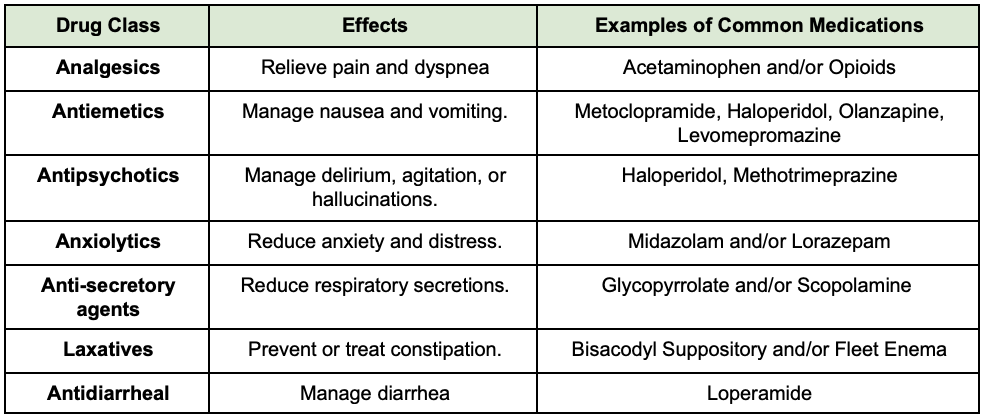
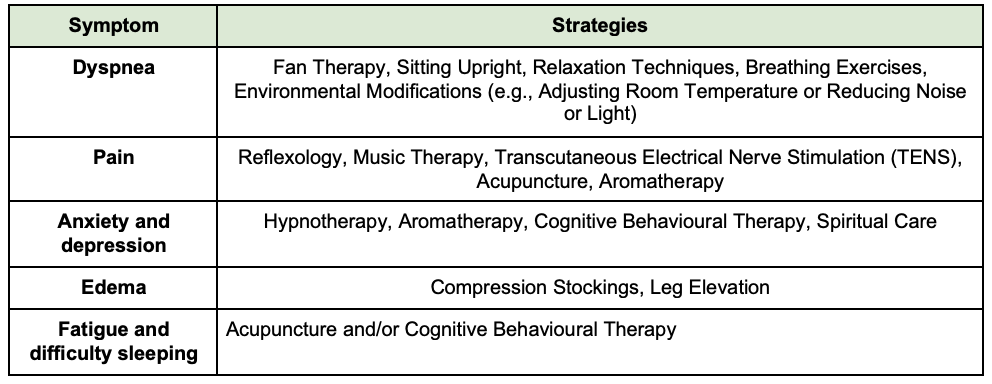
Anticipatory prescribing, an important component of home-based palliative care, involves the proactive practice of prescribing medications for palliative patients to help ease symptoms that can occur in the last few hours or days of life. These symptoms may include pain, agitation, breathlessness, nausea and vomiting, anxiety, delirium, and respiratory secretions [1]. Anticipatory prescriptions include analgesics, antiemetics, antipsychotics, anxiolytics, and anti-secretory agents that nurses, physicians, and trained healthcare providers can administer. Administration may be done with a needle and syringe or a needle-free technique, where the syringe is connected to a pre-existing subcutaneous catheter [2]. At the end-of-life, administration is mostly done with a subcutaneous catheter. In a home setting, these medications along with relevant medical supplies are dispensed and stored in the home in a “symptom management toolkit” so that they are readily available whenever symptoms arise [1]. Examples of these medications are summarized in Table 2. Beyond the use of medications, non-pharmacological interventions are also utilized to promote more effective palliative care. Non-pharmacological interventions for symptom management are outlined in Table 3.
When caring for a patient whose care is transitioning from primarily oncologic care to primarily palliative care, it is important to consider deprescribing medications that are no longer indicated. Patients with advanced cancer often have a large pill burden, including medications for primary or secondary prevention which may no longer serve a benefit for people with a prognosis of days, weeks, or months [1]. Polypharmacy creates burdens to patients including pill fatigue, cost, and risk of side effects. Deprescribing is the practice of identifying and discontinuing medications with little or no benefit and potential harm, with the goal of improving quality of life [1]. It is typically performed via the following steps:
There are also various tools to support deprescribing, with the “OncPal Deprescribing Guideline” being developed to identify potentially inappropriate medicines in the palliative oncology setting [2]. Examples of classes of medications that are appropriate to consider deprescribing include statins and in some cases antihyperglycemics, antihypertensives, gastroprotective medications, and vitamins/supplements [1].
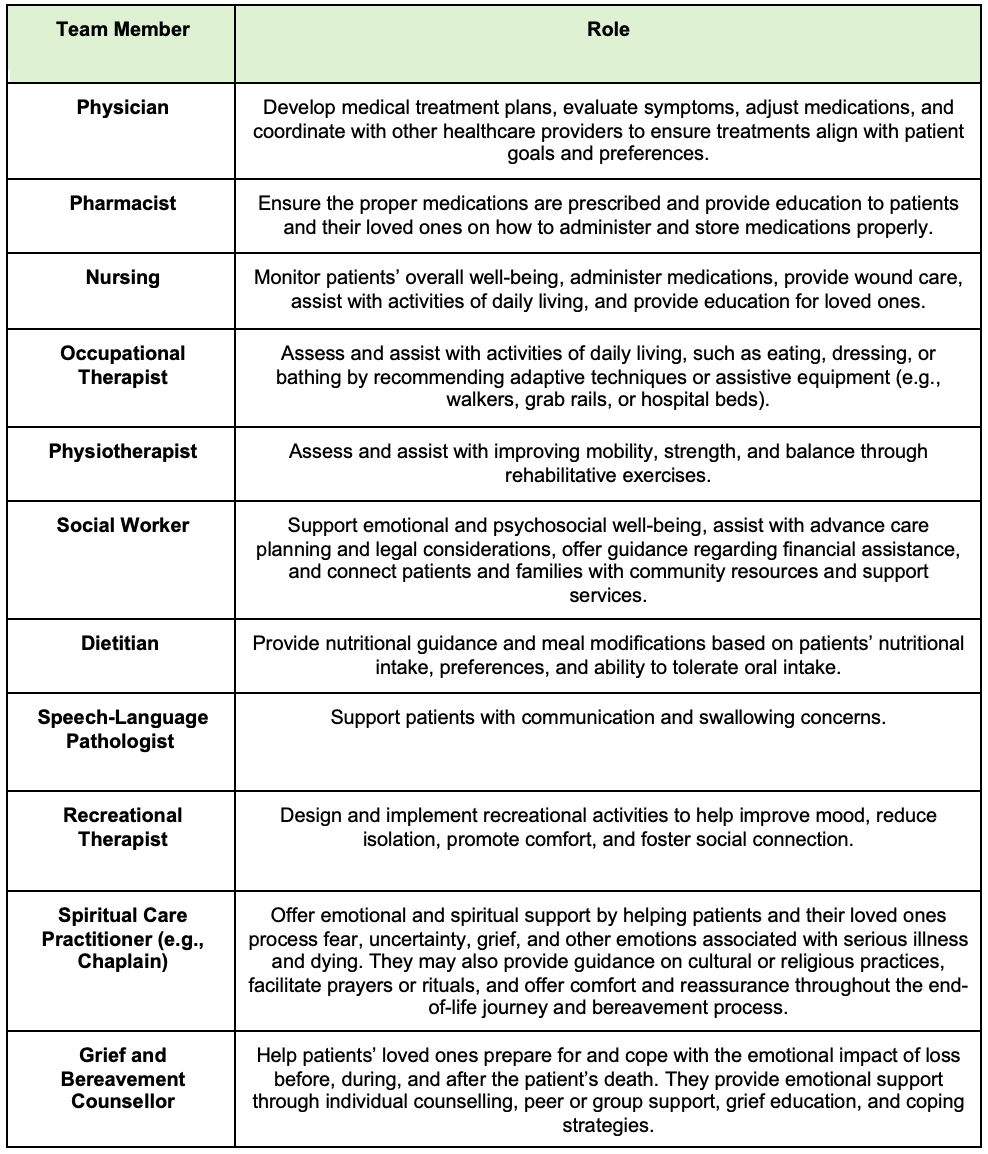
Home-based palliative care relies on an interdisciplinary team working together to support the patient and loved ones. The team may include physicians, nurses, social workers, home/personal support workers, volunteers, spiritual care providers, community organizations, and other healthcare professionals [1]. Depending on the region and available services, teams may offer regular home visits and 24/7 on-call support [1]. Table 4 summarizes the roles of some of the community palliative care team members.
Home-based palliative care plays an important role in preserving dignity and autonomy by allowing patients who wish to die at home the opportunity to die in a familiar and comfortable environment while receiving the appropriate care. Health care professionals can support dignity by recognizing both the patient and their loved ones as the unit of care, while ensuring effective symptom management, continuity of care, and respect for individual wishes [4]. The integration of home-based palliative care has been associated with improved quality of life and a greater likelihood of patients dying at home in accordance with their preferences. It may also reduce emergency department visits, healthcare costs, and hospital admission and length of stay [1]. Currently, there are resource limitations to dying at home. In many cases, there is a large reliance on patients’ loved ones to be caregivers, which can lead to burnout. If care needs are too high for caregivers, looking into hospice would be appropriate.
The period at which patients receiving palliative care transitions from active participation in activities of daily living to progressive decline of functional and cognitive status, worsening signs/symptoms, and decreased response to treatment is described as the transitional phase of the dying process. When a patient with incurable disease becomes bedbound and dependent on care because of disease progression, this may be followed by accelerated decline and indicate a prognosis of days to weeks [1]. End-of-life involves 3 stages: early, middle, and late. These involve a series of signs and symptoms that may occur as the body shuts peripherally to centrally [2].
Early Stage (approximately >7 to 28 days before death)
Middle Stage (>3 to 7 days before death)
Late Stage (<1 to 3 days before death)
Providers should be aware of medical emergencies that may arise in the palliative setting. When left unnoticed or untreated, it may lead to a poorer quality of life and/or a shortened prognosis. Patients with advanced cancer are at risk of palliative and oncologic emergencies. Management for such may involve home visits and/or presentation to hospital, depending on the person’s goals of care. Clinical decisions should consider patients’ wishes, history and prognosis of the disease, patients’ physical condition, burden and likely outcome of treatment, and symptom burden of the condition [1]. Anticipatory care should also be considered, such as inserting subcutaneous butterflies to allow for a reliable route of administration of crisis medications and/or teaching family/friends/caregivers who are willing how to administer subcutaneous medications in case a nurse/provider is not present in the home
Common emergencies in palliative care include [1, 2]
More information on these conditions and their respective management plans is found in the Cancer Complications and Emergencies and Pain Management modules at https://www.learnoncology.ca/modules
When a person with an incurable cancer has functional decline due to disease progression, it is important for providers to identify their care needs and whether they need increased community supports. This decision is made based on the opinion of various healthcare providers engaged in the patient’s care, and a conversation should be had with the patient to identify their personal goals, determine the feasibility and safety of their home environment, and discuss legal issues if not addressed prior. Optimization of the at-home dying process involves both de-prescription of unnecessary medications and anticipatory prescribing of medications that can improve quality of life, along with referrals to multidisciplinary care team members. Finally, it is important for providers to be aware of the stages of dying and common oncologic emergencies.
Use your mouse to click through the slides and answer each question in the text box provided.
Note: This case can be completed on an iPad. To do this download the (free) Articulate Mobile Player for the iPad by clicking here.
